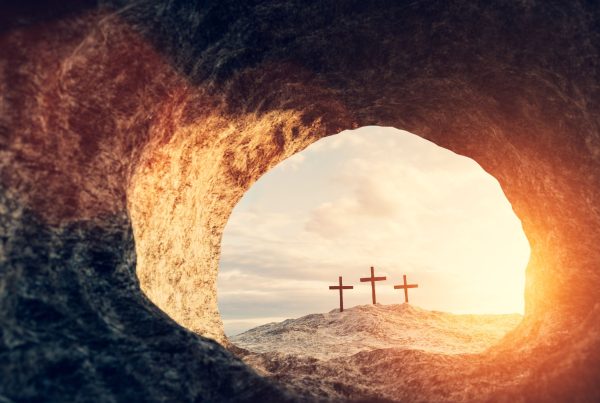
Caves. Tombs. Places hewn from rock, shrouded in shadow. We instinctively associate them with endings, with silence, with the chilling finality of death. They represent the places where vibrant life ceases, where hope is laid to rest, often sealed away behind an impenetrable stone.
As we stand in this week leading up to Easter Sunday (April 20th, 2025), our thoughts naturally gravitate towards one specific cave: a garden tomb outside Jerusalem. On the Friday we call Good, the narrative seemed to reach its tragic conclusion there. The lifeless body of Jesus, the one hailed by some as Messiah, was hastily placed within its cold confines. Matthew’s Gospel tells us Joseph of Arimathea “laid it in his own new tomb, which he had cut in the rock. And he rolled a great stone to the entrance of the tomb and went away” (Matthew 27:60, ESV).1 To ensure this ending was absolute, religious leaders sought official measures: “So they went and made the tomb secure by sealing the stone and setting a guard” (Matthew 27:66, ESV). Sealed. Guarded. Final. The hope that had walked dusty roads, healed the sick, and promised a kingdom seemed utterly extinguished, entombed behind rock and Roman authority.
It’s easy to focus on the darkness, the finality, the apparent victory of death. But the staggering message of Easter, the truth that split history in two, declares something profound about the nature of God Himself: He is the God of the Cave.
Our God is not one who operates only in the light, avoiding the uncomfortable shadows of our world. He is not deterred by the darkness that descends, whether literal or metaphorical. The Psalmist understood this long ago, writing: “If I say, ‘Surely the darkness shall cover me, and the light about me be night,’ even the darkness is not dark to you; the night is bright as the day, for darkness is as light with you”2 (Psalm 139:11-12, ESV). God’s presence and purpose were not sealed out of that tomb; they were powerfully at work within it. The place designed by humans to contain death became the very place God chose to shatter its power forever.
What happened when Sunday dawned? Matthew records a dramatic scene: “And behold, there was a great earthquake, for an angel of the Lord descended from heaven and came and rolled back the stone and sat on it” (Matthew 28:2,3 ESV). Mark tells us the women arriving found the stone, “very large,” already “rolled back” (Mark 16:4, ESV). Inside, they didn’t find the expected scene of death, but an astonishing announcement from heavenly messengers: “Why do you seek the living among the dead? He is not here, but has risen!” (Luke 24:5-6, ESV).
The cave was empty. Not because of grave robbers, but because of divine power. The God of Life had invaded the domain of death and emerged victorious. The emptiness wasn’t a void of loss; it was the definitive statement of resurrection. The cave couldn’t hold Him. God took the ultimate symbol of limitation and finality and transformed it into the undeniable evidence of infinite life and power. Death itself was disarmed. As the Apostle Paul would later write, quoting ancient prophecies: “‘Death is swallowed up in victory.’ ‘O death, where is your victory? O death, where is your sting?'” (1 Corinthians 15:54-55, ESV). The4 victory belongs to God, won right there in the darkness of the cave.
This isn’t just an ancient story; it carries potent truth for us today. We all encounter “caves” in our journey. Perhaps it’s the cave of grief after a loss, the darkness of depression or anxiety, the tomb of a failed relationship or career, the heavy stone of addiction or regret, or the silence of waiting for prayers to be answered. We feel stuck, sealed in, hopeless. We walk through our own “valley of the shadow of death” (Psalm 23:4).
Easter proclaims that the God of that cave is the God of our caves too. The same power that brought Jesus forth from the tomb is at work in our world, in our lives. The Apostle Paul spoke of this “immeasurable greatness of his power toward us who believe, according to the working of his great might that he worked in Christ when he raised him from the dead…”5 (Ephesians 1:19-20, ESV). That power can reach into our darkest places, roll away the stones that seem immovable, and bring forth life where we thought only death could reside.
The empty tomb isn’t just history; it’s an invitation. It calls us to stop seeking the living among the dead – to stop dwelling solely on what has been lost or what seems impossible. It invites us to believe in the God who specializes in resurrection, who can bring beauty from ashes, hope from despair, life from death.
As we look forward to celebrating Easter Sunday, let’s embrace the hope embodied in the empty cave. Let’s trust the God who met humanity at its point of deepest despair and turned it into the moment of greatest triumph. He is the God of the Cave, and because He lives, we can face our own caves not with finality, but with faith, anticipating the dawn of His resurrection power.
May this Easter week fill you with the life-transforming hope of our Risen Lord!